
NIWA
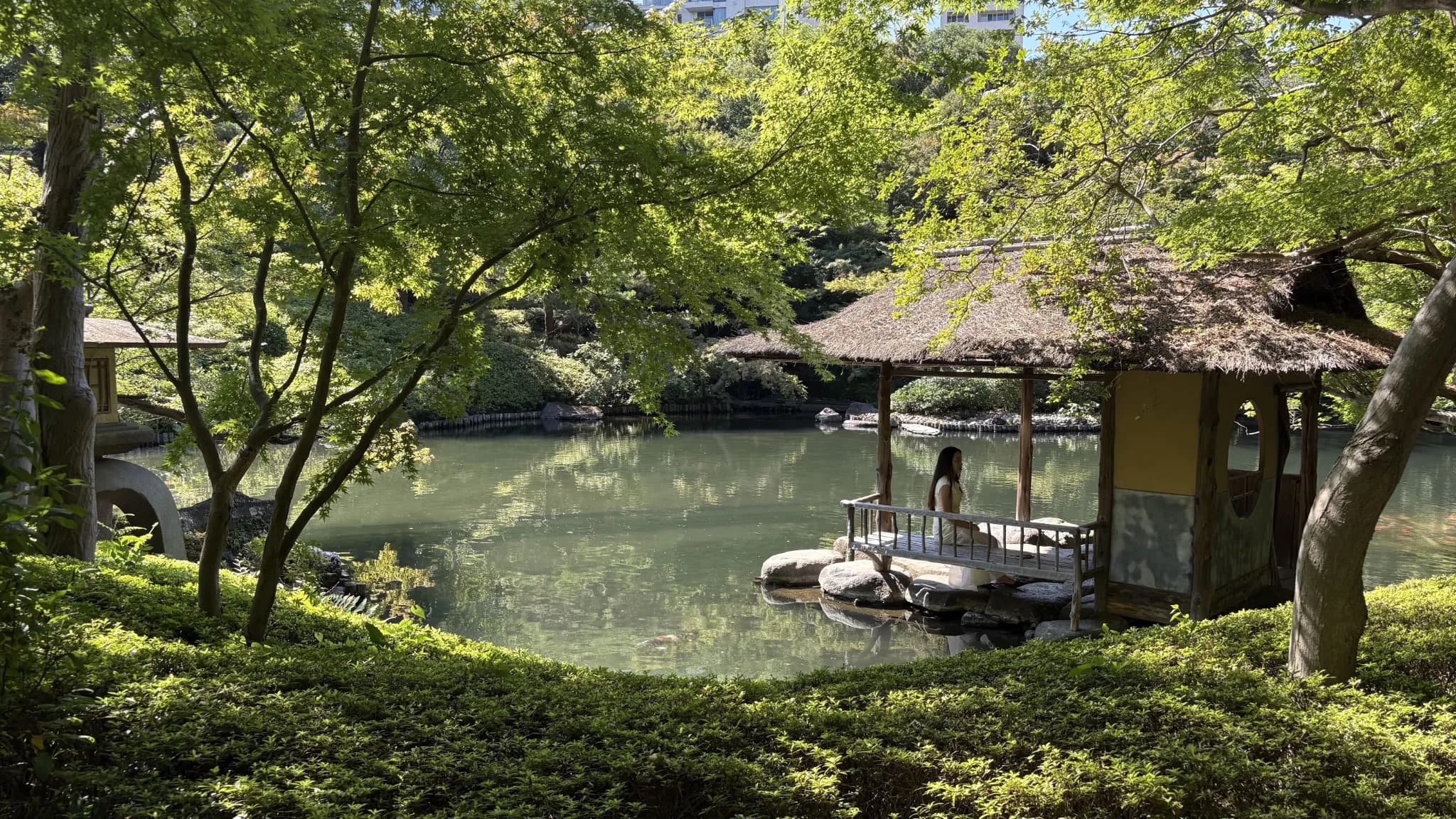
A pond, garden pavilion, and layered greenery at Happo-en Garden

Garden Stories / Garden / 1-1-1 Shirokanedai, Minato City, Tokyo 108-0071, Japan

Happo-en Garden

A Four-Century Garden Shaped by the Slopes of Shirokanedai

Set across the slopes of Shirokanedai, Happo-en Garden unfolds around a central pond, with centuries-old bonsai, pavilions, and tea houses revealing a different composition at every turn.

01 / Garden Profile

Know the garden

Start with the profile, the outline of the place, and the elements worth reading before you walk.

A Garden That Opens in Every Direction

In Shirokanedai, Tokyo, there is a garden that feels quietly removed from the pace of the city. The name Happo-en conveys the idea that beauty can be found in every direction.

Its appeal does not rest on a single, perfected view. You descend a slope, follow the edge of the pond, pause inside a pavilion, and climb toward higher ground again. Each change in position rearranges the relationship between water, trees, stone, and architecture, allowing the garden to reveal itself anew.

Time Passed Down Through Generations

The history of this land reaches back to the early Edo period. It is associated with the residence of Okubo Hikozaemon and later passed into the hands of the industrialists Shibusawa Kisaku and Kuhara Fusanosuke.

Kuhara, who shaped the foundation of the present garden, is remembered for valuing the idea of “ordering nature” rather than imposing a garden upon it. By paying close attention to every branch and plant, he sought to reveal the character already present in the terrain and trees. That approach continues in the careful stewardship of the garden today.

Walking Around the Pond, Changing the View

At the center of the garden lies a pond embraced by the sloping land. Near the water, koi and visiting birds come into view. From higher paths, the pond and canopy form a broad landscape composition.

At Kakutei, pillars and openings frame the scenery like a living picture. At Suichin, visitors meet the pond from almost the same level as the water. Although the garden remains the same, its atmosphere changes according to where one stands. This continual editing of perspective is one of the pleasures of a strolling garden.

Centuries Held Within a Small Pot

The bonsai path displays shimpaku junipers, Ezo spruce, and other cultivated trees, including specimens approximately 525 years old. Within the limited space of a pot, bonsai evokes the scale and endurance of a tree weathered by wind and time. It is a living art that expresses nature at a different scale from the surrounding garden.

In an old shimpaku, pale deadwood and living green coexist. By looking closely at the movement of branches, the spread of roots, and the texture of bark, one begins to sense the years shaped jointly by nature and human care.

The Quiet Approach to the Tea House

The tea house Mu-an was originally built by the Yokohama silk merchant Tanaka Heihachi and later relocated by Kuhara Fusanosuke. A story remains that the building was transported without being dismantled, preserving not only its structure but also its memory.

Passing through the low Kido Gate, following stepping stones, and approaching the tea house are all part of the experience. The path lowers the gaze, adjusts the pace, and draws attention to surrounding sounds. The garden begins to shift the senses long before the visitor reaches the building.

NIWA's Perspective

What stands out at Happo-en is an attitude of working with nature rather than controlling it: reading the existing terrain and the individuality of each tree, then carefully revealing what is already there.

Pond, slope, old trees, bonsai, stone monuments, pavilions, and tea houses were introduced across different periods, yet the garden carries a continuous sense of time. Its beauty is not maintained by fixing a finished form, but by protecting a living state that changes with every season. Through that ongoing work, four centuries of history remain visible in the present landscape.

Before You Visit

The garden can generally be visited free of charge, but Happo-en is also an active venue for weddings and private events. Available hours and accessible areas may change depending on scheduled functions, so checking the official website before visiting is recommended. For quieter photography, weekday mornings or late mornings are often the most suitable choice.

What to notice

Garden elements to read slowly

A Strolling Pond Garden Shaped by Elevation

Paths connect the upper slopes with the water's edge around the central pond. From higher ground, the garden appears as a broad composition; at Suichin, koi and reflections can be observed close to the water. Changes in elevation transform the same pond from a distant landscape into an intimate scene.

A Bonsai Path Holding Five Centuries of Time

The bonsai path includes old shimpaku junipers and Ezo spruce, with specimens approximately 525 years old. Their trunks, exposed roots, and balance between deadwood and living foliage compress the passage of natural time into a remarkably small scale.

Four Pavilions That Frame the Landscape

Four pavilions—Kakutei, Rokkakutei, Marutei, and Suichin—are placed throughout the garden. At Kakutei, pillars and openings frame the pond and planting like a painting. These structures offer rest while also directing how the landscape is seen.

02 / NIWA craft notes

Read through a gardener's eye

Not as sightseeing notes, but as clues for understanding garden craft: pruning, stone, water, shade, and the decisions behind them.

01

Ordering Nature Rather Than Manufacturing It

A garden's identity does not come simply from adding more elements. At Happo-en, the terrain and old trees are read carefully, with pruning used to guide light, depth, and sightlines. Maintenance is less about uniform shape and more about allowing the landscape to breathe.

02

Elevation Creates a Rhythm of Walking

Slopes, steps, stepping stones, and waterside paths continually change the visitor's pace. Rather than leading directly to a single highlight, the route unfolds through climbing, descending, and pausing. The path itself acts as an editorial line through the garden.

03

Using Pavilions as Instruments of View

Pillars, eaves, and openings conceal parts of the landscape while quietly defining what remains visible. Architecture is not merely a backdrop; it is integrated as a device for adjusting perception, producing a distinct composition from every seat.

03 / Garden Walk

Walk this garden

Move from route to access and map context, then open the film walk when it is available.

How to experience this garden

A slower route for noticing

01

1. Enter Through the Main Gate

Enter through the main gate from Shirokanedai Station and confirm the day's garden access at the main building. Routes may change during weddings or private functions, so checking with staff first is helpful.

02

2. Slow Down at the Kido Gate

After passing under the Kido Gate, pause to notice its low height and moss-covered roof. The entrance immediately demonstrates how the garden adjusts posture and pace.

03

3. Continue From Rokkakutei to the Bonsai Path

Take in the garden's depth from Rokkakutei, pass the stone pagoda, and continue to the bonsai path. Look closely at bark, roots, deadwood, and new growth rather than viewing each bonsai only as a silhouette.

Compact notes before visiting

Address
1-1-1 Shirokanedai, Minato City, Tokyo 108-0071, Japan
Nearest station
Shirokanedai Station (Tokyo Metro Namboku Line / Toei Mita Line), Exit 2
Hours
Facility hours: Weekdays 10:00-19:00; weekends and public holidays 9:30-19:30. Garden access hours and areas may vary depending on events; check the official website before visiting.
Closed
No fixed closing day stated. Garden access may be restricted for weddings, private functions, or facility events.
Entrance fee
Free garden admission; access may be limited depending on scheduled events.

Hours, fees, and closed days may change. Please confirm official information before visiting.

Check the entrance, station distance, and surrounding streets before you go.

Open in Google Maps

04 / Related

Related garden stories

Continue from this garden into nearby story themes, quiet films, and editorial contact.

Watch garden walks

NIWA Walks records garden atmosphere, natural sound, and walking pace.

Open NIWA Walks

Interview and PR inquiries

Send story ideas, media opportunities, and archive requests to NIWA.

Contact NIWA

Follow the garden archive

NIWA expands quiet garden footage, photography, and reference boards on YouTube, Instagram, and Pinterest.