

About This Garden
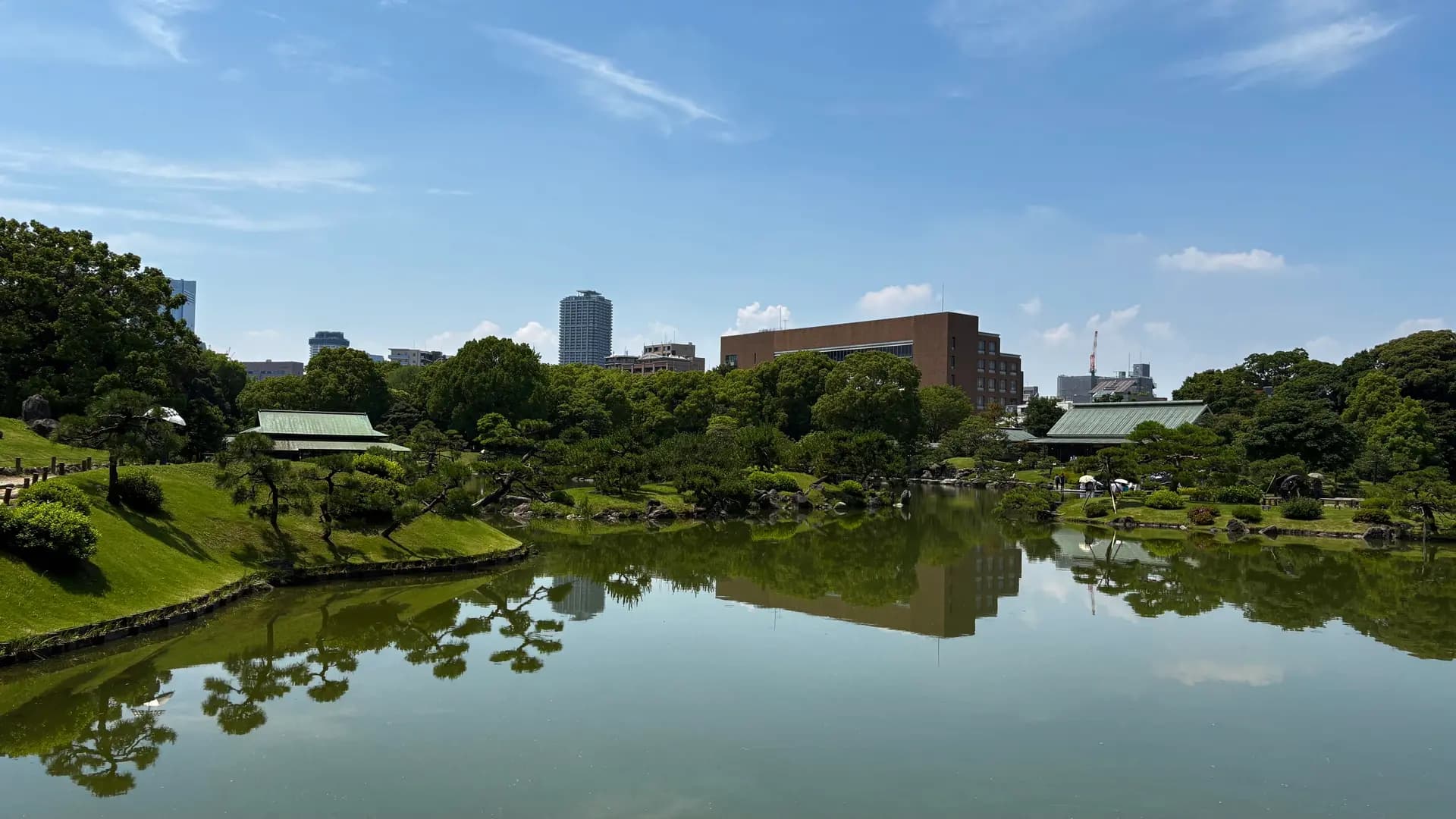
Kiyosumi Garden is a strolling pond garden built around three key elements: a large central pond, artificial hills, and dry landscape compositions.
The garden carries forward design techniques developed in the daimyo gardens of the Edo period, while also reflecting the refinement of Meiji-era garden culture. It was later developed by Iwasaki Yataro, founder of Mitsubishi, and came to be regarded as one of the finest examples of a modern strolling pond garden.
At the heart of the garden lies a broad pond, once supplied with water from the Sumida River. Around it are carefully placed stones collected from across Japan. As visitors walk along the water’s edge, the scenery changes from one viewpoint to the next, revealing shifting relationships between water, stone, trees, and hills.
Kiyosumi Garden also played an important role during the Great Kanto Earthquake, serving as a place of refuge and helping to protect many lives. The main garden area was later designated a Place of Scenic Beauty by the Tokyo Metropolitan Government in 1979.
Key Elements to Notice
The first thing to notice at Kiyosumi Garden is the expansive pondscape.
As you walk around the pond, the garden reveals different views from every angle. Reflections of trees and stones on the water, layered with artificial hills and carefully composed plantings, create a sense of depth, calm, and movement.
The stones are another defining feature of the garden. Collected from various regions of Japan, they are not simply decorative objects. They form the structure of the landscape. Stones placed along the water’s edge, stepping stones, and stone arrangements all guide the visitor’s gaze and movement through the garden.
In spring, the open park area on the west side offers a brighter atmosphere, with around twenty cherry trees creating a popular place for hanami.
From a Gardener’s Perspective
The strength of Kiyosumi Garden lies in its composition of water and stone.
By placing a large pond at the center and arranging stones, trees, and hills around it, the garden creates a sequence of changing views. It is not designed to be seen as a single picture, but as a space to be experienced through walking.
The handling of stone is especially important. The shape, size, angle, and placement of each stone influence the atmosphere of the entire garden. At Kiyosumi Garden, the stones have a strong presence, yet they remain in harmony with the pond, trees, and surrounding scenery.
The garden also shows how green spaces can create quietness and breathing room within the city. A garden is not only a place for beauty and appreciation. It can also be a place to rest, gather, and, in times of disaster, to find safety.
Kiyosumi Garden is valuable not only for its beauty, but also for what it teaches us about the role of gardens in urban life.