

About this garden
Sugekari Park is a historic public park tucked into the residential area of Aobadai in Meguro. During the Edo period, this area was part of the suburban residence of the Oka Domain from Bungo Province, and it was known as a strolling-style daimyo garden with a pond and waterfall.
In the Meiji period, Saigo Judo, the younger brother of Saigo Takamori, acquired the land and built both Western- and Japanese-style residences. The garden was also extensively redesigned with a pond, waterfall, and broad lawn, and was once praised as one of the finest gardens in eastern Tokyo.
Today, part of that historic landscape has been restored based on garden research carried out in the late 1990s. The original grand estate no longer remains in full, but the restored pond, Japanese-style building, and surrounding greenery quietly evoke the depth and dignity of the former residence.
What to see
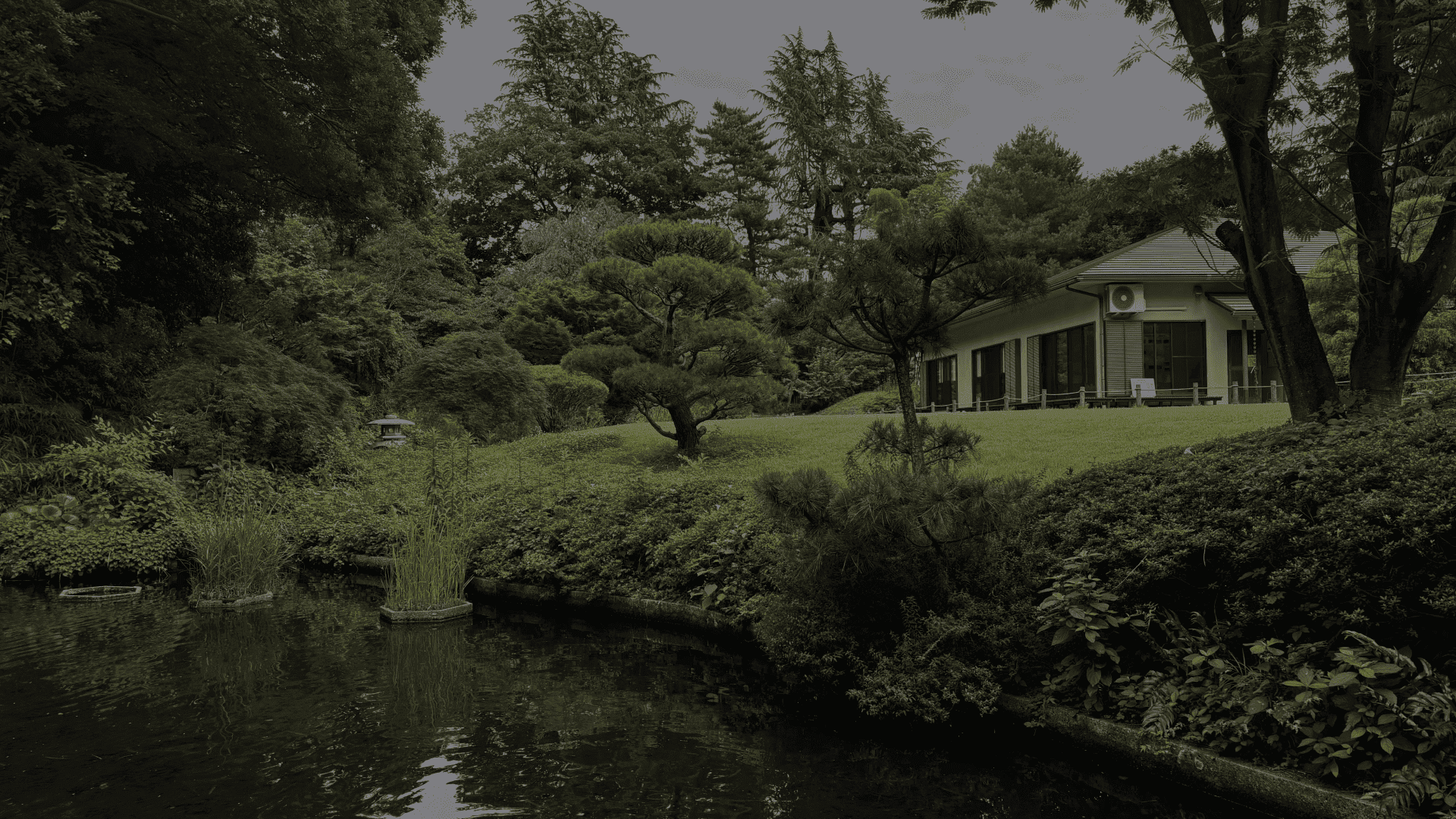
The first element to notice is the restored pond and the composition around it. The relationship between water, stones, planting, and the Japanese-style building creates a modest but atmospheric garden scene within the city.
The adjacent Japanese-style building is also essential to the experience. Rather than viewing the garden only from the paths, try looking at it from the building side, where the traditional relationship between room and garden becomes clearer.
The park also includes a lawn area, children’s play space, and preserved slope greenery. This mixture of restored garden and everyday neighborhood park gives Sugekari Park its quiet charm.
From the gardener’s perspective
What makes Sugekari Park interesting is that it is not a perfectly preserved historic garden, but a restored one. Its value lies in how traces of a lost landscape were researched and reinterpreted for use as a contemporary public park.
When walking through the garden, look beyond the pond and stones. Notice how views open and close, how the Japanese-style building frames the garden, and how the planting controls the atmosphere.
This is a place where three layers of time overlap: an Edo-period daimyo garden, a Meiji-period estate garden, and a modern public park. For that reason, it is worth appreciating not only as a garden, but also as an example of how historic landscapes can survive within the city.