

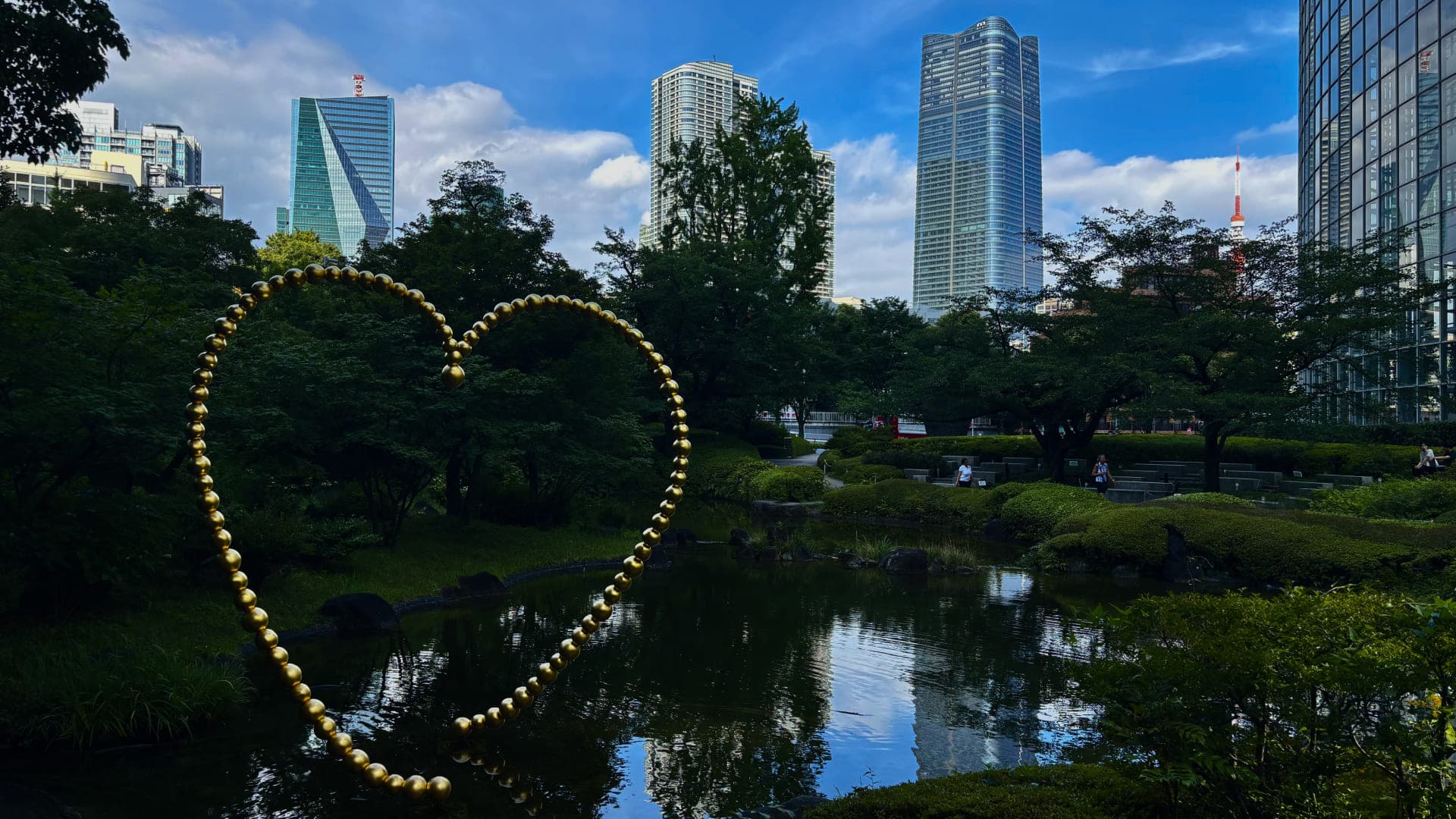
A quiet water garden in the middle of Roppongi
Mohri Garden sits between Mori Tower and the TV Asahi headquarters inside Roppongi Hills. The surrounding area is filled with shops, restaurants, museums, offices, and constant movement, yet the atmosphere changes as soon as you stand beside the pond.
At the center of the garden is Mohri Pond. Around it are a waterfall, a small stream, clipped shrubs, cherry trees, ginkgo, and other mature trees. The garden is compact, but it still offers the pleasure of walking around water, shifting viewpoints, and seasonal planting. Beneath the high-rise glass architecture of Roppongi, the sound of water creates a small pause in the city.
From a daimyo residence to a contemporary urban garden
The memory of this site reaches back to the Edo period. The area once formed part of the upper residence of the Mohri family, lords of Chofu Domain, and its garden landscape developed around water and greenery. Later, the land changed hands: it became the residence of Rokuichiro Masushima in the Meiji period, then the Tokyo factory of Nikka Whisky, and later part of TV Asahi’s property. The pond was long known locally as Nikka Pond.
During the Roppongi Hills redevelopment, the remains of the old pond were preserved underground, and the present Mohri Garden was created above them. This makes the garden especially interesting: it is a contemporary urban landscape, but one designed not to erase the memory of the land. The old water is not directly visible, yet it continues as a hidden layer beneath the current pond.
Old trees and contemporary art on the same water
Some trees that existed before the redevelopment, including cherry, ginkgo, hackberry, and camphor trees, were preserved or replanted. The garden changes through the year: cherry blossoms and azaleas in spring, water lilies and irises in early summer, hydrangeas during the rainy season, and autumn foliage later in the year.
In Mohri Pond stands Jean-Michel Othoniel’s public artwork Kin no Kokoro. Its golden linked beads reflect on the water and shift visually as visitors move around the pond, appearing at times like a heart and at others like a Möbius loop. This meeting of Edo-period memory, modern landscaping, and contemporary art feels distinctly Roppongi.
NIWA perspective
Mohri Garden is not a vast historic garden. Its value lies in how it creates breathing space inside an extremely dense urban environment. The pond lowers the gaze, the waterfall softens the city noise, and the planting allows visitors to sense the seasons. It shows how a modern city can preserve a memory of water, trees, and land without freezing it as a museum piece.
For photography, morning light, reflections of the surrounding architecture, spring blossoms, autumn color, and evening illumination work especially well. Including the glass buildings behind the garden helps express what makes Mohri Garden unique: the contrast between Tokyo’s vertical city and a small, persistent landscape of water.